
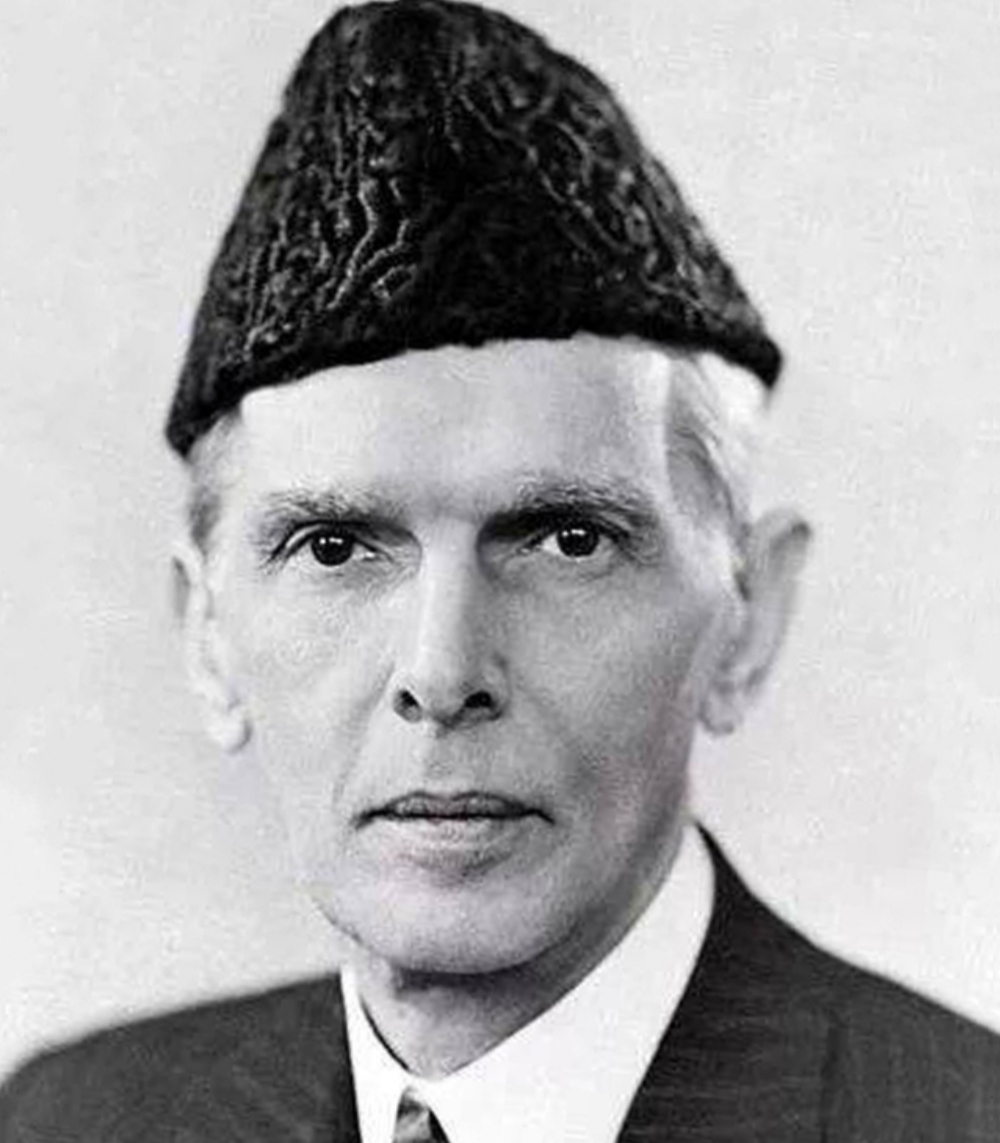
Quaid-e-Azam Muhammad Ali Jinnah: The Architect of Pakistan
Quaid-e-Azam Muhammad Ali Jinnah, born Mahomedali Jinnahbhai on December 25, 1876, in Karachi, stands as one of the most towering figures in the history of the Indian subcontinent and the founder of Pakistan. Revered as the “Great Leader” (Quaid-e-Azam) and “Father of the Nation” (Baba-e-Qaum), Jinnah transformed from a successful barrister into a visionary statesman whose leadership culminated in the creation of an independent Muslim homeland on August 14, 1947. His life exemplifies unwavering principles, constitutionalism, and political acumen in the face of immense challenges.
In an era marked by colonial rule, communal tensions, and competing nationalist visions, Jinnah championed the rights of Muslims, advocating initially for Hindu-Muslim unity and later for a separate nation to safeguard their political, economic, and cultural identity. His Fourteen Points, the Lahore Resolution, and tireless negotiations with the British and the Indian National Congress were pivotal. As Pakistan’s first Governor-General, he laid the foundations of the new state amid chaos, refugee crises, and administrative hurdles. Jinnah’s legacy endures through his ideals of unity, faith, and discipline, which continue to inspire generations. This essay explores his early life, political journey, leadership qualities, achievements, and enduring impact, highlighting why he remains Pakistan’s greatest leader.
Muhammad Ali Jinnah was born into a prosperous Gujarati Khoja Muslim merchant family in Wazir Mansion, Karachi. His father, Jinnahbhai Poonja, was a successful businessman, and his mother, Mithibai, provided a nurturing environment. Jinnah received his early education at the Sindh Madrassat-ul-Islam and later at the Christian Mission School in Karachi. Even as a young boy, he displayed traits of discipline, intelligence, and independence.
At the age of 16, Jinnah traveled to London in 1892 to join his father’s business apprentice but soon pursued law instead. He enrolled at Lincoln’s Inn and was called to the Bar in 1896, becoming one of the youngest Indians to achieve this distinction. His time in England exposed him to Western democratic ideals, liberal thought, and parliamentary traditions, which profoundly shaped his political philosophy. He admired figures like Dadabhai Naoroji and absorbed the values of justice, equality, and rule of law. Upon returning to India, Jinnah established a thriving legal practice in Bombay (now Mumbai), earning a reputation as a brilliant, meticulous, and fearless advocate. His success in high-profile cases showcased his sharp intellect and command over constitutional matters.
Jinnah’s early personal life included marriage to Emibai in 1892 (who died young) and later to Rattanbai “Ruttie” Petit in 1918, a Parsi socialite who converted to Islam. These experiences, combined with his professional achievements, built the resilience and cosmopolitan outlook that defined his later career.
Entry into Politics and Advocacy for Hindu-Muslim Unity
Jinnah entered politics around the turn of the 20th century, joining the Indian National Congress in 1906. He quickly rose as a prominent moderate leader, earning praise for his advocacy of Hindu-Muslim unity. Gopal Krishna Gokhale, a leading Congress figure, described him as the “best ambassador of Hindu-Muslim unity.” Jinnah’s efforts bore fruit in the 1916 Lucknow Pact, where he played a key role in forging an agreement between the Congress and the All-India Muslim League. The pact ensured separate electorates for Muslims and greater representation, marking a high point of inter-communal cooperation.
Simultaneously, Jinnah joined the Muslim League in 1913 and became its president. He also participated in the All-India Home Rule League, demanding self-governance from British rule. His Fourteen Points in 1929 were a comprehensive constitutional blueprint to protect Muslim interests in a future independent India, including demands for federalism, provincial autonomy, and safeguards against majority dominance. These points underscored his foresight as a constitutionalist who believed in negotiated, lawful progress rather than mass agitation.
However, ideological differences emerged. Jinnah resigned from the Congress in 1920, disapproving of Mahatma Gandhi’s Non-Cooperation Movement and satyagraha, which he viewed as promoting anarchy over disciplined constitutional struggle. This marked a shift toward focusing more on Muslim League affairs, though he continued seeking unity until the late 1930s.
The Struggle for Pakistan and the Two-Nation Theory
The 1930s and 1940s tested Jinnah’s leadership amid rising communalism and British divide-and-rule policies. The failure of the 1937 provincial elections, where Congress ministries allegedly marginalized Muslims, convinced Jinnah that Muslims needed a separate homeland to preserve their distinct identity. He articulated the Two-Nation Theory, asserting that Hindus and Muslims were two separate nations with distinct religions, cultures, histories, and aspirations.
The pinnacle came with the Lahore Resolution on March 23, 1940 (also known as the Pakistan Resolution), passed under Jinnah’s leadership at the Muslim League’s session in Lahore. It demanded independent states for Muslim-majority regions in northwestern and eastern India. Despite ridicule from Congress leaders like Jawaharlal Nehru and opposition from the British, Jinnah’s strategic acumen prevailed. During World War II, while Congress leaders were imprisoned for the Quit India Movement, the Muslim League under Jinnah gained strength and organizational depth.
The 1946 provincial elections were a triumph for the League, securing most Muslim-reserved seats and validating the demand for Pakistan. Cabinet Mission Plan negotiations failed due to irreconcilable differences on power-sharing. Jinnah’s resolute “Direct Action Day” call in 1946, though controversial amid ensuing riots, underscored the urgency. Ultimately, the Mountbatten Plan led to the partition of British India, and Pakistan emerged on August 14, 1947. Jinnah’s tenacity against formidable odds—British reluctance, Congress opposition, and internal challenges—made this possible.
Leadership Qualities
Jinnah’s leadership was characterized by integrity, discipline, vision, courage, and constitutionalism. He was incorruptible, often prioritizing principles over popularity. His famous motto—”Unity, Faith, and Discipline”—became the guiding philosophy for the new nation. Unlike charismatic mass mobilizers, Jinnah led through intellect, legal expertise, and strategic negotiation, earning respect even from adversaries.
He demonstrated remarkable foresight in foreseeing the dangers of a centralized Hindu-majority state for Muslims. His personal sacrifices were immense; despite deteriorating health (he suffered from tuberculosis and lung disease), he worked tirelessly. Jinnah’s oratory, marked by clarity and conviction, galvanized millions. As a parliamentarian, he excelled in debate, always grounding arguments in law and justice. His cosmopolitan background allowed him to bridge traditional and modern elements, envisioning Pakistan as a progressive, democratic state where citizens of all faiths would enjoy equal rights, though rooted in Islamic principles of social justice.
Achievements as Governor-General
Upon independence, Jinnah assumed the role of Pakistan’s first Governor-General. The new state faced monumental challenges: massive refugee influxes (millions of Muslims migrating amid violence), administrative collapse, economic instability, and threats from India over Kashmir and other issues. Jinnah personally oversaw refugee camps, established government institutions, and addressed the Constituent Assembly.
In his August 11, 1947, speech to the Constituent Assembly, he outlined a vision of Pakistan as a secular, democratic state: “You are free; you are free to go to your temples, you are free to go to your mosques or to any other place of worship in this State of Pakistan. You may belong to any religion or caste or creed—that has nothing to do with the business of the State.” He emphasized merit, justice, and equality. Jinnah worked on framing a constitution, promoted industrial and agricultural development, and strengthened the armed forces. His efforts in foreign policy laid groundwork for Pakistan’s international standing.
Legacy and Conclusion
Jinnah passed away on September 11, 1948, just over a year after independence, due to illness exacerbated by overwork. His death was a profound loss, but his legacy endures. Pakistan owes its existence to his vision, determination, and statesmanship. Universities, airports, roads, and national holidays commemorate him. Biographers like Stanley Wolpert hail him as Pakistan’s greatest leader, comparable to George Washington for America.
Quaid-e-Azam’s ideals remain relevant. In a world of challenges, his emphasis on education, unity, rule of law, and tolerance offers guidance. He proved that a determined individual, armed with principles, can reshape history. For students, Jinnah exemplifies that leadership is not about charisma alone but integrity, hard work, and service to the nation.
As Pakistan progresses, remembering Quaid’s words is essential: “With faith, discipline and selfless devotion to duty, there is nothing worthwhile that you cannot achieve.” His life teaches resilience, patriotism, and the pursuit of justice. Quaid-e-Azam Muhammad Ali Jinnah will forever be the beacon lighting Pakistan’s path.